New research from international charity WaterAid reveals the double threat of the climate crisis and this year’s Super El Niño, expected to make it even harder for communities, economies and businesses to prepare for, recover from and adapt to an unprecedented year of extreme weather events.
Current forecasts indicate that a Super El Niño is expected to develop, with much greater-than-average warming of the Pacific Ocean expected to peak between September and November 2026.
WaterAid, with academics from the University of Bristol and Cardiff University, has analysed how previous El Niño events affect rainfall in some of Asia’s biggest cities and across East Africa, helping anticipate what the next Super El Niño could bring.
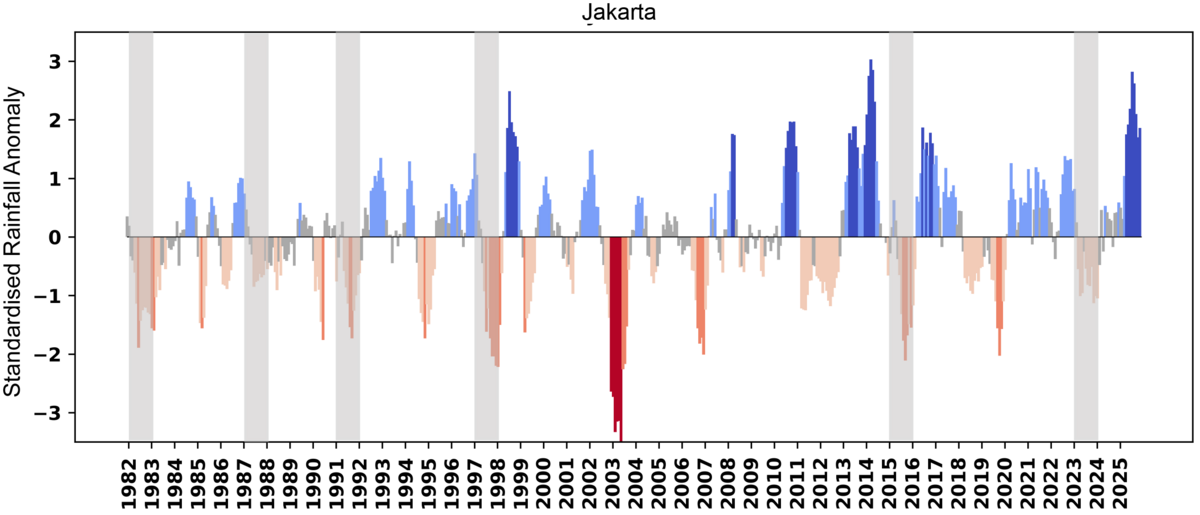
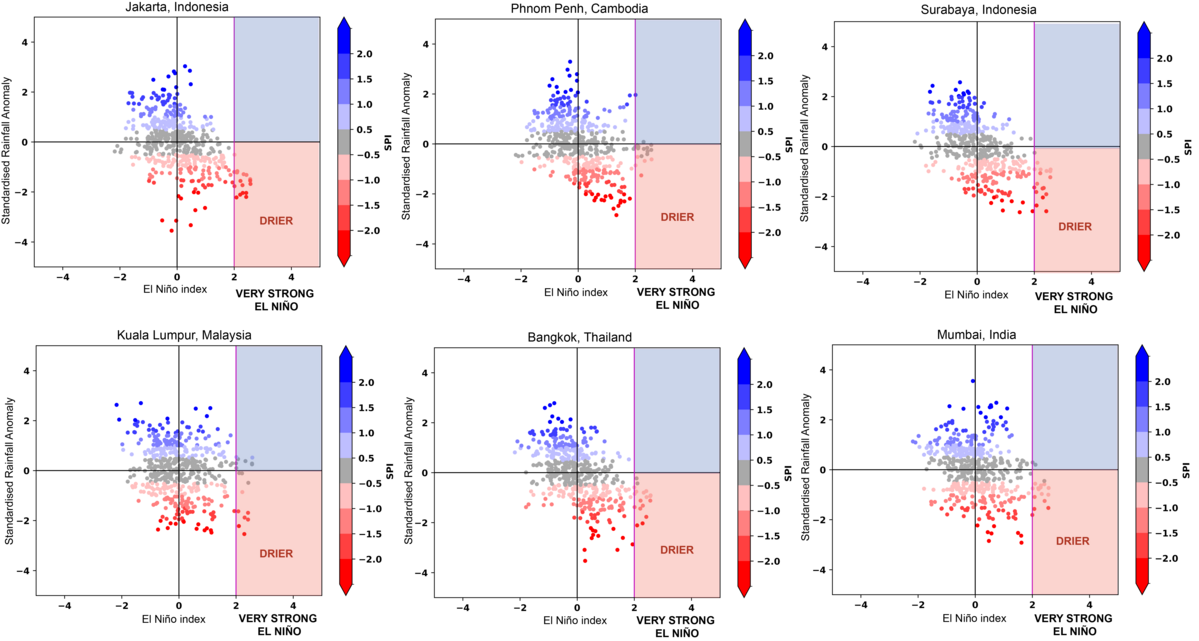
By analysing the relationship between the strength of El Niño and rainfall over the last 44 years, and spotlighting the six strongest El Niño events, the research shows how climate patterns are interrupted or supercharged when El Niño hits. The analysis identifies drought and flood “impact zones” across key cities and regions, many of which are critical to global supply chains.
The new research finds El Niño risks causing disruption across Asia and Africa, including:
• In Southeast Asia, El Niño disrupts long-term wetting trends in highly populated cities like Bangkok (Thailand), Jakarta (Indonesia), and Phnom Penh (Cambodia), bringing lower-than-normal rainfall that may lead to significant drought.
• In China, cities like Shanghai and Hangzhou, already experiencing “Climate Whiplash” – an intensification of both wet and dry extremes – see El Niño compound this effect and result in significantly higher-than-normal rainfall. The same trend is found in Colombo, Sri Lanka.
• Cities in “transition zones” of El Niño impacts, including Faisalabad and Karachi (Pakistan) and Dhaka (Bangladesh), could see a mixture of both higher and lower rainfall, bringing greater uncertainty and making preparation more difficult.
• In East Africa, another climate whiplash hotspot, El Niño has a split impact, with neighbouring cities often facing sharply different outcomes. For example, Nairobi and Kampala are seeing wetter weather whilst neighbouring Addis Ababa becomes drier.
Crucially, the 2026 Super El Niño is set to be unprecedented in the modern record, meaning past events may not reveal the full scale of extreme weather to come.
Crucially, the 2026 Super El Niño is set to be unprecedented in the modern record, meaning past events may not reveal the full scale of extreme weather to come.
Helen Rumford, Head of Climate Policy at WaterAid, said:
“The data is clear: a Super El Niño poses the greatest risk yet to some of the world’s biggest cities, leaving them with too much or too little water.
“As El Niño increases the risk of both flooding and drought across Asia and Africa, the risk to businesses and economies grows, which is why investing in water solutions to prepare and protect cities is so critical.
“Solutions like solar-powered water systems that can ensure water stays flowing during drought, or building water and sanitation systems that can withstand extreme flooding, can keep people safe, healthy and able to recover faster from a Super El Niño.”
Too much, or too little water, can pollute precious water sources, destroy crops and increase the risk of deadly diseases like cholera. Water stress also disrupts communities’ access to safe water, sanitation and hygiene services and poses growing risks to businesses and global supply chains, from Ethiopia’s coffee-growing regions to garment manufacturing hubs in Bangladesh and Cambodia.
Mai-Lan Ha, Director of Private Sector Policy & Advocacy at WaterAid, said:
“When factories run short of water, infrastructure is damaged by floods, or workers lose access to safe water and sanitation, the impacts ripple across continents through the supply chains that keep our economies running.
“This research helps identify where those risks are most likely to emerge, whether prolonged drought in Cambodia or unpredictable flooding in Bangladesh, giving governments, businesses and investors the evidence they need to prepare before the next El Niño hits.
“The looming Super El Niño will be felt far beyond the communities directly in its path, bringing both drought and flooding that can disrupt industries and supply chains worldwide.
“Investing in climate-resilient water, sanitation and hygiene services is one of the smartest ways to protect communities, strengthen supply chains and build resilience to an increasingly uncertain climate.”
This is a defining year for action on the global water crisis. WaterAid is calling on the UK Government to prioritise water security, sanitation and hygiene as part of its G20 Presidency and ahead of the UN Water Conference.