
Egypt’s Ministry of Petroleum and Mineral Resources, Clean Air Task Force (CATF), and the Climate and Clean Air Coalition (CCAC) today advanced their cooperation through launching a Project for the Egyptian Oil and Gas Sector to develop methane abatement guidelines and capacity building under the Fossil Fuel Regulatory Programme (FFRP), a country-driven initiative that supports governments in strengthening regulatory frameworks to reduce methane emissions from their energy sectors.
The parties formalized the agreement through a signing ceremony on the sidelines of the CCAC Annual Meeting, building upon Egypt’s entry into the FFRP in June 2026.
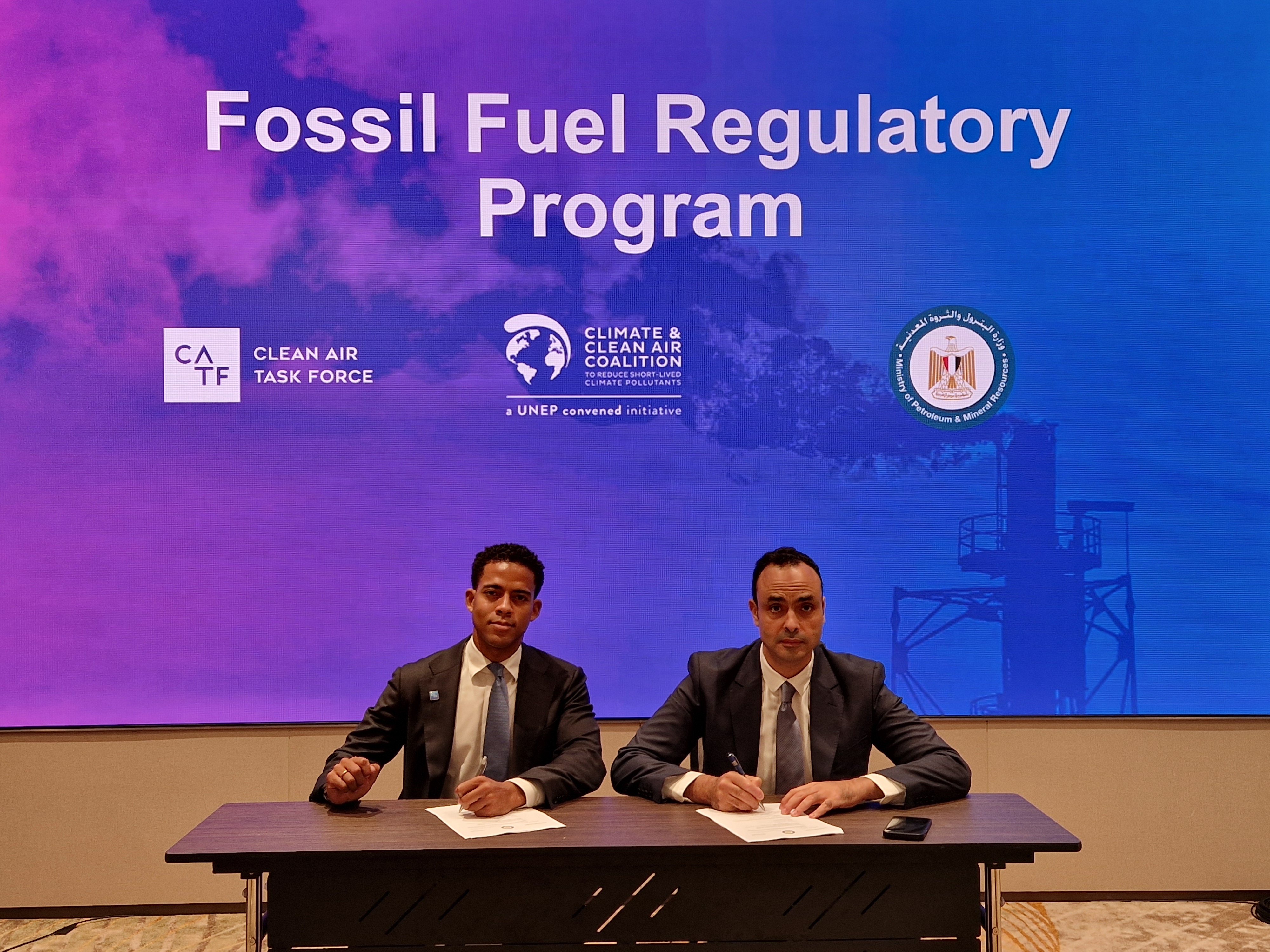
“Curbing methane emissions is not only an environmental imperative but also a significant economic opportunity for our industry,” said Eng. Mahmoud Nagy, Undersecretary and Supervisor of HSE, Energy Efficiency, Climate, and Official Spokesperson at the Ministry of Petroleum and Mineral Resources. “This cooperation aligns with the directions of His Excellency the Minister of Petroleum and Mineral Resources to reduce emissions and gas flaring, operationalizing our emissions reduction strategy across several working programs. It also serves as a crucial step towards developing and implementing a unified methane Measurement, Reporting, and Verification system across the oil and gas sector, alongside enhancing technical capacities, deploying cutting-edge leak detection and repair technologies, and driving Egypt’s transition towards a low-carbon economy.”
“Methane targets and commitments are strongest when they are backed by comprehensive policy and clear guidance,” said James Turitto, Director of Oil and Gas, Methane Pollution Prevention, at Clean Air Task Force. “With this cooperation formalized, CATF together with CCAC can move into the hands-on work with Egypt to improve methane outcomes in its oil and gas sector.”
“Reducing methane is our climate emergency handbrake, but lasting progress depends on the institutions and regulatory frameworks that turn ambition into action” said Martina Otto, Head of the Climate and Clean Air Secretariat. “Through this partnership, Egypt is taking an important step towards strengthening its regulatory framework and building the technical capacity needed to deliver lasting results.”
Through the FFRP, CCAC and CATF will work with the Ministry of Petroleum and Mineral Resources and the Center of Excellence for Energy Transition to develop methane abatement guidelines, build tools to support those guidelines, provide hands-on experience with emission detection technologies and engage the private sector on compliance.
Reducing methane emissions is one of the fastest and most cost-effective ways to slow the rate of near-term warming while delivering benefits for air quality, public health and sustainable development. Low- and middle-income countries account for two-thirds of the top methane emitters in the energy sector, yet many lack the regulatory frameworks needed to act on that potential.
Launched in September 2024, the FFRP supports governments in building the regulatory infrastructure needed to identify and reduce methane emissions from oil, gas and coal operations. Participants shape the support they receive according to national and subnational priorities, with each engagement informed by an assessment of existing regulatory frameworks and the joint development of a tailored workplan. The FFRP currently supports eight programs across seven countries: Egypt, Bosnia and Herzegovina, Brazil, Ghana, Iraq, Kazakhstan, and Argentina’s Neuquén province.
This programme is funded through the CCAC Trust Fund and does not provide support to private sector fossil fuel stakeholders or fund activities that would extend or expand fossil fuel operations.
Learn more about the Fossil Fuel Regulatory Programme here.