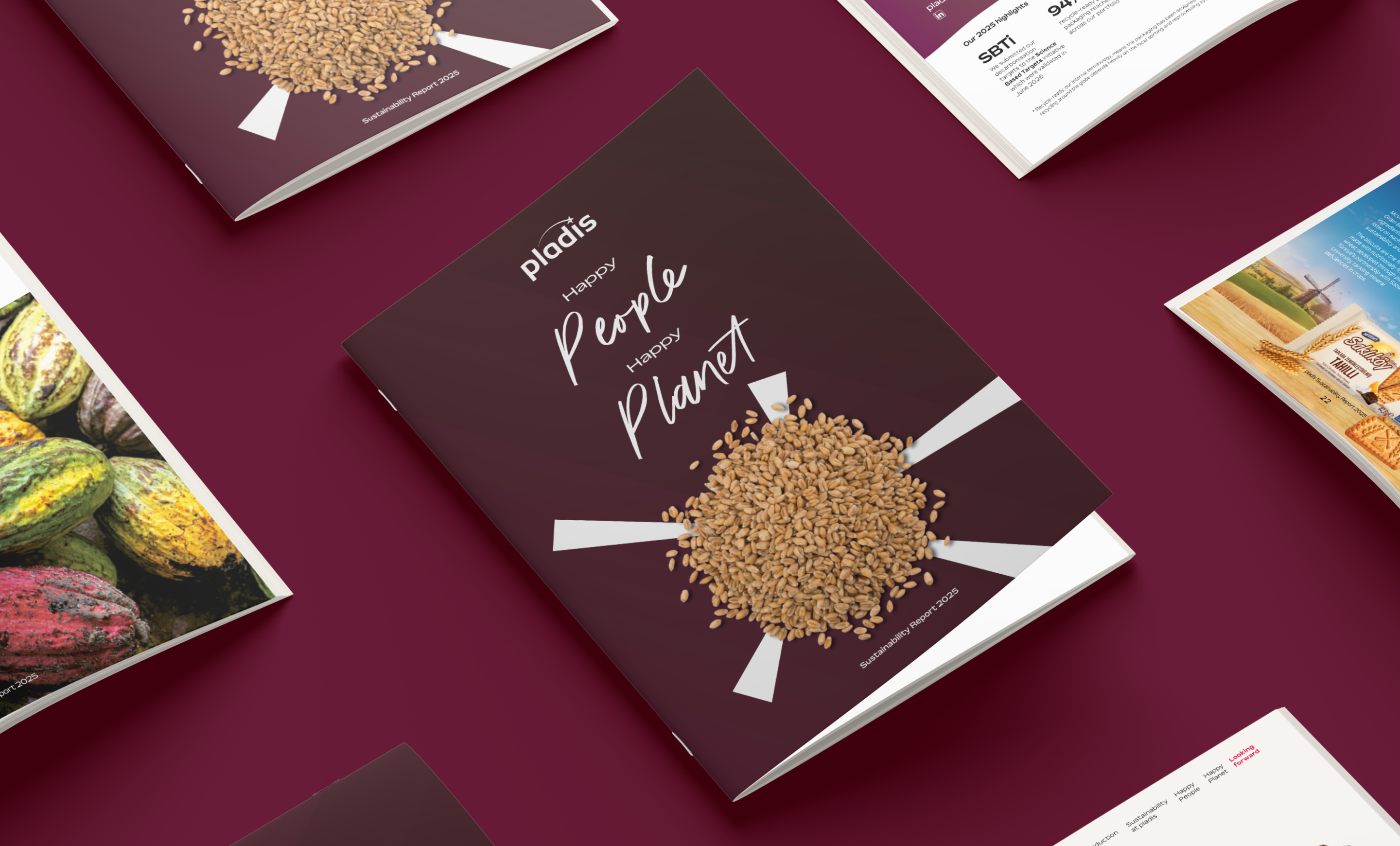
pladis, the global snacking company behind McVitie’s, GODIVA and Ülker, has secured validation of its science-based climate targets from the Science Based Targets initiative (SBTi) for the first time, as it publishes its 2025 Sustainability Report and sets out the next phase of action under Happy People, Happy Planet, its global sustainability strategy to 2030.
The report brings together pladis’ progress across carbon, packaging, responsible sourcing and operations, including validated climate targets, 94% recycle-ready plastic packaging, investment in its UK bakery network, and sourcing programmes across wheat, cocoa and palm oil.
Developed following pladis’ first Double Materiality Assessment, Happy People, Happy Planet focuses on five priority areas: responsible snacking; colleagues and communities; carbon; packaging and waste; and responsible sourcing.
Suzanne Westlake, Director of Sustainability at pladis, said: “Securing SBTi validation is a significant milestone, confirming that our climate targets are grounded in science and giving us clear direction for reducing emissions. Together with our Happy People, Happy Planet strategy, those targets give us a single global framework for action. But it is people across our business and value chain – colleagues, farmers, suppliers and partners – who will translate it into real change. Working together will be essential to building on the progress already made and delivering the change still needed.”
Science-based climate targets and carbon progress
Under its SBTi-validated targets, pladis has committed to reduce absolute Scope 1 and 2 greenhouse gas emissions by 58.8% and Scope 3 emissions by 35% by 2034, from a 2023 baseline. The validated targets also include a 42% reduction in forest, land and agriculture (FLAG) emissions by 2034. Scope 3 emissions – those generated across pladis’ value chain – account for 91% of the company’s carbon footprint, and pladis has committed to reaching net zero across its full value chain by 2050.
The report also details pladis’ £68 million multi-year investment in its UK bakery network. Projects within the programme – including new moulding lines and robotics and ovens at sites including Manchester and Aintree – are expected to reduce emissions by around 876 tonnes of CO₂e each year once complete.
Securing SBTi validation is a significant milestone, confirming that our climate targets are grounded in science and giving us clear direction for reducing emissions.”
Suzanne Westlake, Director of Sustainability, pladis
Packaging: recycle-ready progress and virgin plastic reduction
By the end of 2025, 94% of plastic packaging across pladis’ global portfolio was recycle-ready. This represents substantial progress against pladis’ ambition to make its plastic packaging reusable, recyclable or compostable by the end of 2025, with work continuing on the remaining formats.
As part of the next phase of its packaging work, pladis has set a target to reduce virgin plastic use by 10% by 2030 from a 2025 baseline.
Packaging highlights include McVitie’s completing development and internal testing of recycle-ready packaging for 100% of its Digestives range, with rollout continuing across remaining formats in 2026. Ülker Kakao switched from composite packaging to a recycle-ready single-material pouch, reducing plastic use by 18%, while Sultana Yofruit moved to a single-material polypropylene wrapper to improve recyclability and strengthen pack performance. pladis also trialled digital watermarking on Sultana packs in Belgium through the HolyGrail 2030 consortium, designed to help recycling facilities identify and sort packaging more accurately.
Responsible sourcing and traceability
pladis also reported progress across wheat, cocoa and palm oil, reflecting the importance of agricultural ingredients within its value chain.
In 2025, 94% of the palm oil used to manufacture pladis products globally could be traced back to the mill where it was processed.
Through its UK Back to Farm programme, pladis sourced more than 30,000 tonnes of wheat grown using regenerative practices from around 50 farmers in 2025, reducing emissions by 104kg of CO₂e per tonne of flour compared the AHDB UK baseline (340kg of CO₂e).
Through Beyond Cocoa, delivered with the Earthworm Foundation, pladis provided mobile healthcare access to 2,440 cocoa farmers and their families in 2025. Six supplying cooperatives were also verified by the Earthworm Foundation as sourcing from deforestation-free areas.
The full pladis 2025 Sustainability Report is available to download at here.